Monday, 21 April 2014

The Free-To-Play Revoloution


Free to play
Free-to-play, a business model that is taking the games industry by storm, it’s been around for years but why only now has it become so popular? And why is it so successful?

The free to play model has become vastly popular in recent years, however it has been around for a lot longer than one may think. The earliest type of free to play games were mainly aimed at younger and more casual audiences, titles like Runescape and Neopets were around in the late 90s and offered most of the game for free but offered a premium subscription service unlocking extra content and game play elements.  For example in Runescape there are various areas that can only be explored if you are a premium subscription owner.

A major factor in the advancement of free to play games is the advent of mobile phone gaming, portable gaming used to just be on devices produced along side home consoles; they were clumsy, large and you could only really play games on them.  Now you can play them on your mobile phone which you carry around anyway, making it much more convenient. In the early days of mobile gaming, games were often sold as free but after a couple levels you would hit a wall where you cannot continue without “buying a new game”. Nowadays you are faced with in game transaction allowing you to buy extra content get past levels you are stuck on or speeding up certain aspects of the game to continue playing rather than wait a few more hours; this is usually done with in-game currency which can be purchased. This is now the standard model for free to play, depending on how the developers implement it, some are a little more subtle while others are accused of being a pay-to-win game.
An example of the sort of items you can buy in the game DOTA 2
One of the more unique free to play games on the market at the moment is DOTA 2, a free MOBA game made by valve; recently featured in a documentary by valve. This game is more or less completely free, all items you can purchase are simply for aesthetic purposes and the XP boosters don’t add much unless you are good at the game. However steam will put popular player made items on sale through the steam workshop. One of the major pluses for valve is that to play the game you will need to install their online digital distribution software Steam, increasing the chances of sales on other games that are often on offer.

The free to play model on one hand is really good for the consumer as well as the developer, the consumer gets the game for free and the developer gets the game in front of lots of people. Sounds good right? On the other hand, it can be a bit of a pain for the gamer. Whilst you do get to play a game for free, there are a number of problems you can encounter with F2P games such as in game adverts or you might not get the whole game unless if you pay up. That said, many gamers have become used to owning physical copies games and having everything there instead of having to pay to unlock everything.  Therefore, some consumers may get angry. I feel that free to play games are definitely here to stay but I consider them to be a bit of a temporary fix for the economical issues the games industry is struggling through, unless game developers innovate the business model it will fade away and become something we just see in mobile games.


References:

http://www.e-clubthailand.com/image/wallet/Dota-2-Store.jpg
http://s.pro-gmedia.com/videogamer/media/images/pub/large/free.jpg


Sunday, 13 April 2014

History of Gaming Part 3 - 2000 - Present

The long awaited third instalment of gaming history, this post will cover the history of gaming from 2000 up to now. I will try and keep it relatively condensed; obviously there is a lot to cover as this is the period where gaming becomes a lot more mainstream and popular. This is also the period where I started to really get in to gaming as it was when I grew up so I actually owned a lot of these consoles and had great experiences with them; if I didn’t pick up these consoles and get in to gaming I probably wouldn’t be at university studying game design. The industry advances in leaps and bounds in the years to come, three generations of consoles, massive advances in technology mean for much better graphics and the online revolution really kick-starts with help from Xbox live, PSN and Steam.

The first step towards modern day gaming was the release of the PlayStation 2 in early 2000, this showed a massive leap in graphics compared to the PlayStation 1. The console was home to many great titles that many consider to be classics; games like Shadow of the Colossus, Metal Gear Solid 2 and 3, Jak & Daxter, Grand Theft Auto 3 and Kingdom Hearts etc. When Sony officially discontinued the PlayStation 2 in January of 2013, over 5 years later than the game cube and 4 years later than the original Xbox. For over a decade, the console has proven itself a reliable entertainment device and an affordable bridge into gaming for people who couldn’t afford newer consoles and models. As of March 2012, the console has sold over 155 million units. It’s a machine that was home to experimental games, pure titles released for all manner of niche gamer and it bridged many age groups.

A year later Microsoft and Nintendo announce their new consoles within days of each other, Xbox pushing more towards power and Nintendo pushing more towards new forms of interactive gaming. This is also the same year that Sega announces they will no longer be releasing hardware and will instead focus on software due to its Dreamcast failing to sell well due to the PlayStation and PlayStation 2.

This decade of gaming also saw the release of the current generation of consoles, well not quite current as next gen has been available for a couple months now but in my opinion that will only become current gen when the Xbox 360 and ps3 become obsolete. 2005 saw the release of the Xbox 360 a whole year before the PS3 and the WII which gave it a massive head start against its opposition however it also means the technology in the PS3 was considerably more powerful.  However the Xbox did considerably better in the early years mainly due to the PS3s price which was a lot more than the Xbox; Sony combatted this by offering free online play and a cheaper optional subscription service that gave you so many games a month for free. These consoles again brought us many fantastic games that defined the decade, Grand Theft Auto 4 and 5, The Last of Us, the Halo series, Heavy Rain and many more.

PC gaming has also come a long way, especially toward the latter half of the 00s; this was mainly because of the advent of steam. It was first unveiled at GDC 2002 and when it launched a year later, it was far from the popular sales system that we know it as today. In fact, it was first released as a digital distribution surface whose main purpose was to distribute patches and updates to online games. However steam did get better with age and have slowly snowballed in to the go to online distributer for pc gamers, selling triple A and indie titles alongside each other and making pc modding a breeze with Steam workshop steam has soared in to popularity among many.

As of last year we saw the arrival of the next generation of consoles, the Playstation 4 and the oddly named Xbox One. The consoles have been out for around half a year now and have fluctuated a little bit but with the PlayStation 4 coming out just on top on sales. This is mainly due to it being cheaper and the odd announcement of the Xbox One putting off some of Xbox’s fans. They announced there console at a standalone event just before E3 but focussed on the consoles non-gaming functionality and saying that they will get rid of second hand games. They have however pulled a 180 turn on the second hand games due to fans creating a fuss about it and them not getting enough pre-orders in the first few days. I suppose only time will tell who will come out on top, I know Xbox has better games coming this year in comparison to the PS4 however I can see the Xbox struggling unless the price drops.


References:

Images:
http://media.officialplaystationmagazine.co.uk/files/2013/01/PS2-best-sellers.jpg
http://cloud4.steampowered.com/ugc/506952434831402553/30F9E5053DA7D6C3A8FB854CFB60D1BDAB27AFFE/
http://fmobserver.com/wp-content/uploads/2013/06/xbox-meme-3.jpg

Art Direction - Heavy Rain

A couple of weeks ago, in critical studies we were instructed to give a short (emphasis on the short) presentation about art direction. The presentation could be about anything you wanted to talk about, a game or film you like or find inspiring or a painting or image you like; as long as the presentation was about its art direction. I decided to give a SHORT talk about the game Heavy Rain as it is one of the games i have finished quite recently and in my opinion has fantastic art direction.

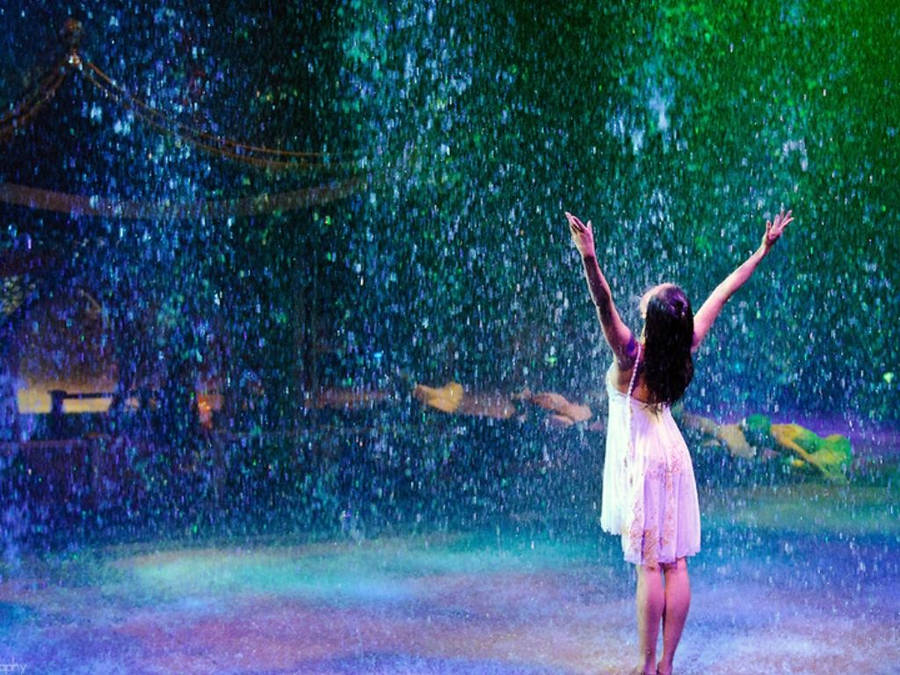
The game itself centres around 4 separate characters, all interwoven and each playing an important role depending on what decisions you make as each. The story is about the origami killer, who kidnaps children and drowns them slowly over so many days giving the fathers of the children various tests, if they pass said tests they get a step closer to finding their child. As you can see the games theme is very dark, this is also quite prevalent in the games visual style too more often than not the overall mood of the scene is summed up by the colour palette, lighting and weather.  This is quite evident in the picture above, the overall tone, weather and colour palette tells the viewer this is a dark and perhaps emotional scene in the game however the lighting highlights a certain area showing a glimmer of hope and drawing your attention to what the character is looking at. It’s also not definite who this character is in this image as it could be either of the 4 you play as throughout the game depending what decisions you make as a player.

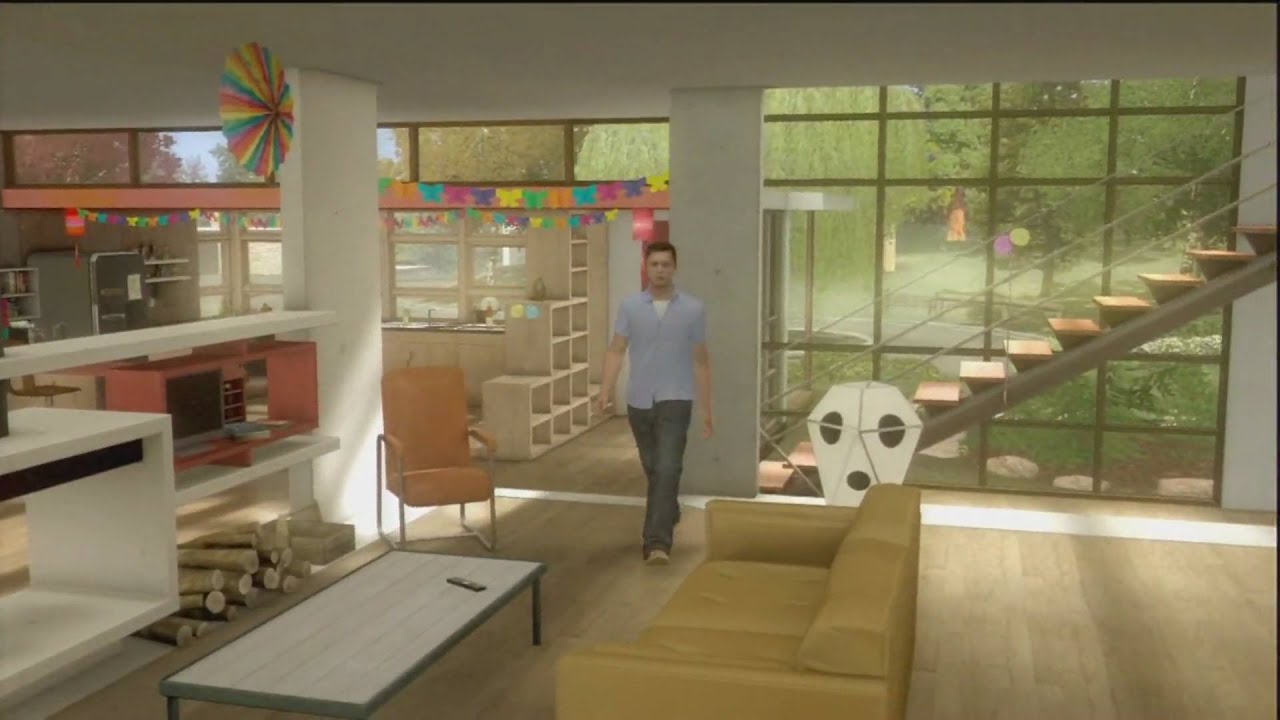
As you progress through the game, the mood and atmosphere change vastly. This is shown in many different ways throughout different segments of the game, an example of this is how the start of the game contrasts the later 3/4s of the game. As you can see in the image above the vivid colours are very saturated, bright and generally happy. This portrays the general mood of the current character, he is happy and with his family, the environment is clean and contemporary; this is probably one of the few scenes in the game where this is the case. The sun is out also at this point, this does not fit the title of the game giving the player an overshadowing feeling that this won’t last.


This is a shot from a little later in the game, as you can see it completely contrasts the previous image. The whole colour palette has changed, the weather is the complete opposite now matching the title of the game and the environment looks a lot dimmer and dirtier. I think this is done because this section of the game needs to convey a much bleaker mood in comparison to the start. It also portrays the feeling of sadness the main character (Ethan Mars) feels after losing his son, the weather in the game is very important, it helps build tension and atmosphere and sets the mood of the current situation. The game is very movie inspired, you can see this throughout the game, the framing, Mise en Scene, lighting, script and symbolism; many people refer to Heavy Rain as an interactive movie due to its lack of gameplay elements. The rain can symbolise a number of things, the most obvious of which could be the emotional state of the character, it can also serve as a plot device, help build atmosphere and could show a cleansing. For example in V for Vendetta (on the left) after being captured and tortured for months on end Evie discovers V was the one imprisoning and torturing her to help overcome her fears. She walks out on the roof and stands in the rain. From this moment on, she’s reborn, the rain symbolizes her baptism; a cleansing of her past and a realization of the future.  I think that the fact that the character in Heavy Rain still looks dirty regardless of the cleansing rain shows that the character is too emotionally stained by his past and can’t forgive himself for it.

I only finished this game recently and I would probably say it’s in my top ten video games of all time, what it lacks in gameplay mechanics it definitely makes up for in story, character building and intense atmosphere; it’s like no other game I have played.

I hope Beyond Two Souls, Quantic Dreams next title lives up to the standard they set in Heavy Rain.

References:


Image references:

Thursday, 6 March 2014

Job Specifications


Last week in Critical Studies, we began to look at job specifications and some of the skills required to obtain a job in the games industry. We discussed the difference between ‘soft’ and ‘hard’ skills, soft skills being communication and teamwork related and the latter being skills, related to specific software like 3DS Max and Photoshop. After this lecture I began to think more about my plans for the future and how to get there, I aim to create a road map detailing where I am now,  where I am going and what I need to do to get there. To start with I looked at various job listings for a few different positions, some because the position sounded interesting to me or because I was a fan of the development studio but finally I found one that ticked both of those boxes. Here is the listing:

Naughty Dog Environment Model & Layout Artist

Responsibilities
·         Create models and assemble scenes for both architectural and organic environments.
·         Trouble-shoot levels and maintain them to stay in frame rate, memory and design spec. 

Requirements and Skills
·         3+ years’ experience in games modelling environments using Maya, or related experience/software.
·         An exceptional understanding of form, shape, structure, and silhouette in regard to modelling
·         Strong experience and techniques in creating plants, shrubs and vines using cards/flats.  
·         Strong artistic ability to visualize entire levels and detail with minimal concept art and direction.
·         Strong technical ability to manage assets to fit memory, design, and frame rate limits.
·         Strong polygonal modelling skills- able to generate clean and efficient models at a very fast pace.
·         Self-motivated- requires minimal direction, can carry on the vision for the level until completion and commit to deadlines.
·         Good communication skills – able to help others and ask for help when needed. Being proactive in sharing info and assets.
·         Great team-player attitude - being flexible with new ideas, being open to direction and changes. Listening to team mates.
·         Deadline oriented- being able to manage and organize work so he meets all the deadlines and is able to adjust when changes happen.
·         Foundation in the traditional arts
 I chose this job listing because the job description best described the aspects I am enjoying most on my current university course and it is a company whose games I have played throughout my life. I’d say that all points listed under the responsibilities section and the first 6, along with the last point in the second section are all hard skills, skills relating to software and technical abilities and the rest would fall under the soft skills heading. I feel I have a very basic understanding of the responsibilities listed, the first one I have done a little of during my first year here at university although my knowledge is basic I feel I would adequately match this requirement by the end of my three year course. The second I know very little about, having built my own PC I know a bit about how it works; especially how games run but I feel this is tailored more towards how engines work which I have next to no knowledge of but I will have by the end of the course (hopefully). There is a fair bit on this list that I’d say at the minute I am nowhere near adequate enough with to get this job, with the exception of the some of the soft skills listed here ( which still needs some work, regardless, You can always build on soft skills) I’d say I really need to work on these over the next 2 and a half years.
The first thing listed under requirements is 3 years modelling experience, which I suppose I would have by the end of the course but I feel that I would need a couple of years in industry before I could really compete for a job like this one. I also think that I would benefit heavily from doing a placement while at university, it would give me approximately a years’ worth of experience that would help build on almost everything listed here. Something that I need to work on in my own time would be my time management, I need to plan more so I can efficiently get through my workload and I think that I should work on my social skills a little more and try to participate with discussions in class. All in all I think that after the three years of my university course come to an end I would tick all of these boxes; however I would probably be a little in-experienced. This sort of job would definitely be something to strive towards but I doubt I would be skilled enough to get this job post-graduation, I’d need a couple extra years in industry first.
Job Listing:
http://www.naughtydog.com/site/careers/environment_model_layout_artist/ 


Sunday, 2 February 2014

Week 18 - 3D Workshop

This week at university we had a 3D workshop that lasted the majority of the week, we were tasked with making a street scene in 3DS Max and texturing it.  We had no tri or texture limits but we had  had to make sure we were efficient and not make anything ridiculous like a 20,000 tri phonebox; everything had to be in proportion too so no 500 tri phoneboxes next to a 5000 tri dustbin. Initially the task did feel a little daunting especially on top of my other work but I definitely gave it 100% ( and barely slept) but the end result was pretty satisfying.  To begin with I modelled a phonebox, I mainly tried this as I had previously attempted it towards the start of the year and thought it would be good to compare; its safe to say i've improved. To be fair it was the start of the year so it was pretty terrible, the tri count was through the roof and the textures didn't line up what so ever but this attempt turned out to be a pretty realistic phonebox. I also decided to use previous assets I had modelled for various assessments to help build a realistic scene, with a little help laying it out from Google maps I managed to create an accurate street around my architecture project. During this week I also learnt a lot about rendering and the use of lighting which is something I had been guessing a lot in my previous work but I will definitely try to incorporate these techniques in my future work. I may also look in to external rendering software such as Marmoset Toolbag.

I do feel a lot more confident using 3DS Max now and I am lot more confident about the Transit van project I have been set that I will need to hand in next week. It has also pushed me to do 3D work in my spare time too like I would with visual design, perhaps modelling objects that I find interesting or that challenge me.


Saturday, 25 January 2014

Visual Design Intensive workshop week - Vehicle Design

This week at uni we were tasked with designing a vehicle based upon an interesting object of our choice, this is the first task we have been given that involves actually designing something so naturally I was a little apprehensive. We started off looking at the basic shapes that make up the object as a whole, we then moved on to look at silhouettes of the object and also of images from books; I mainly looked at birds and insects. We then used those those silhouettes to 'imagineer' a vehicle using marker pens and pads. We were also advised to try and solve a real world problem in some way, so i started to look at planes and the problems they encounter, my initial thoughts were to design a jet that could land vertically however i found that this does actually exist, the Harrier. I then saw that it can only generally land on flat surfaces so i started to look at something that could land on pretty much anything; so i looked at how insects land and stand up and began to draw up some designs. The design seemed to progressively get a little worse and more over the top but i then simplified it down a little and i was pretty happy with my final design. I really enjoyed this weeks work and enjoyed learning a new process, if i was to do it again i would of perhaps been a little more confident and bold with my designs and perhaps spent a little longer on the final. We also had our first digital painting tutorial which went pretty well (it made me want a Cintiq), before this course i had some experience with painting in Photoshop however that was all self taught so it was good to actually be taught how to use it properly. The final turned out pretty well and definitely shows my idea clearly, whilst its not perfect its not bad for the first piece of digital work I've done on this course.

My final Piece for the vehicle design project based on my computer mouse

The course so far...

I've been studying Game Art at DMU for around 4 months and I feel now is a good time to reflect on the course so far. In a nutshell I'm really enjoying it and from what I've heard the course is only going to get more interesting but also more difficult. The work load grows each week but Im yet to feel like its getting on top of me, don't get me wrong I'm up late most nights doing work but that's mostly out of choice. We had an assessment just before Christmas which went surprisingly, well to say that a lot of people have been told to re-do pretty much everything. I did have to re-submit my 3D building project as I had basically messed up some of the texturing which was pretty fair; I know to read the brief a bit better now. Whilst doing this i found it took around half the time to put together in comparison to before and i utilised my texture budget a lot more effectively. 
I was told that if i was to hand my work in as it is I would get a pass grade, which from what I've heard of other peoples assessments, is pretty good. However I was told I could bump my grade up by doing a list of certain tasks, including re-doing all my finals in an A3 sketchbook, clean up all my work on facebook, clean up my sketchbook and fix drawings with hairspray. I would say I've learnt more in these past few months than i have in the past few years and I definitely think drawing comes more naturally to me now and I don't quite have to think about it as much as I did. I do now feel like I should perhaps do something a bit more productive with the little free time I have, do some personal work or masters studies or maybe learn some basic coding skills; especially after the talk we had a couple days back from an Indie game dev, i felt quite inspired to attempt my own game to better understand the process. After the assessment i feel a little more confident in what i have to improve to further my drawings, I need to stop feathering my lines in as it shows the viewer i'm not confident in what i'm drawing. Instead i will try to work a little lighter to begin with and then define my line-work a little heavier afterwards. My tutors also hinted that i may need to look at my composition abit more. Im currently looking alot at using only tone and very minimal line work to show shape and form as it helps build a visual understanding of the object in front of you without worrying about the linework surrounding it.


A quick before and after of one of my finals after re-doing it in A3 over christmas.